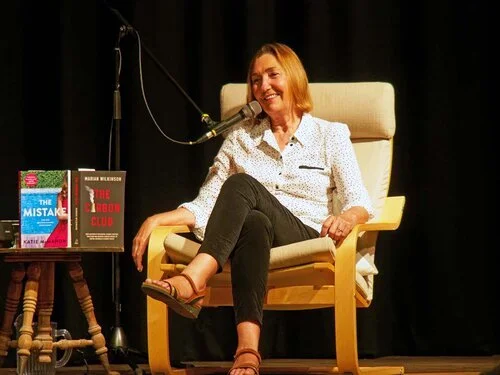
Marian Wilkinson in conversation

Marian Wilkinson in conversation

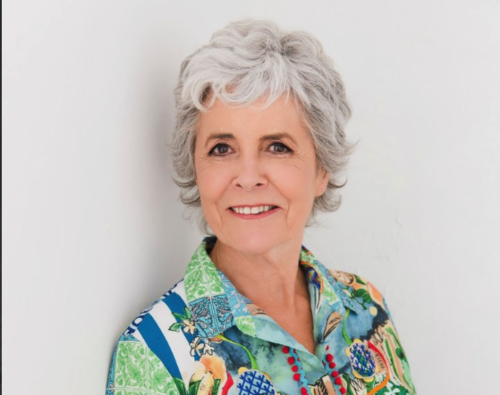
Marian Wilkinson is regarded as one of the most distinguished journalists in Australia. She has won two Walkley Awards and was the first executive producer of Four Corners. She was a senior journalist for many years with The Sydney Morning Herald, was the Washington correspondent for The National Times and The Age and a senior reporter for The Australian. She is the author of three books of investigative journalism, including Dark Victory, co-authored with David Marr.

In the summer of 2019/20, as Australia burned and smoke from its fires encircled the planet, a lot of people wondered why a country with so much to lose through climate change was doing so little.

The Carbon Club explores the reasons behind inaction, and investigates the small group of key players who determined it.

This is the story of how influential climate science sceptics, politicians and business leaders fought to control Australia's response to the climate crisis and why they were so determined to do so.

Central to their strategy was an international campaign to undermine climate science and the urgency of the climate crisis. The sustained success of the carbon club over two decades explains why Australian governments failed to deal with the challenge of climate change. But at what cost to us and the next generation?

As Wilkinson notes: ‘This is a story we need to know because we are still trapped in it’.

Leigh Robshaw in conversation

Leigh Robshaw in conversation

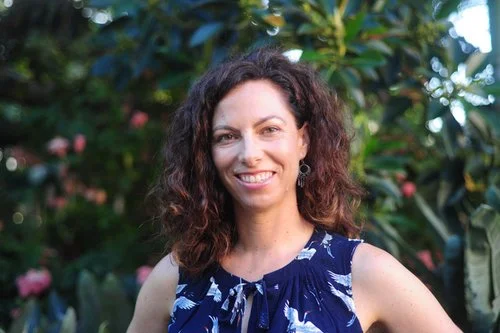
Leigh Robshaw is a journalist, free-lance writer, copywriter, business blogger and sub-editor. She writes for a remarkable range of magazines and publications. Now she has written a fast-paced, colourful and sometimes shocking memoir, You Had Me at Hola, set in South America and Mexico.

A young Australian woman meets a beautiful Peruvian artisan in a market in San Telmo, Buenos Aires. Sensing a deep connection, they fall in love and begin a new life together. Over a period of three years, they travel the continent selling handmade jewellery in the streets and squares of Latin America, dodging police and bandits, mixing with drug dealers and narrowly escaping death.

You Had Me at Hola is a love story between two very different people, with different ways of being. It is about the search for one’s life purpose and the universal quest for belonging.

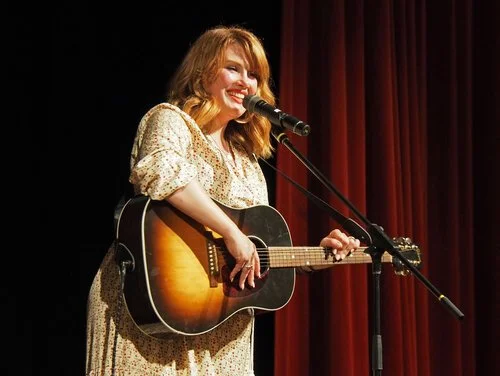
Clare Bowditch in conversation

Clare Bowditch in conversation

Clare Bowditch is a musician, an actor, radio presenter, educator and now author (on her website she calls herself music maker/story baker/educator). She visited Maleny to talk about her memoir, Your Own Kind of Girl, a revealing story of a childhood punctuated by grief, anxiety and compulsion, a story that tells how these forces shaped her life for better and for worse. It is a heartbreaking, wise and at times playful. In this podcast she also sings a couple of her songs.

Clare won an Aria Award for Best Female Artist in 2006, was nominated for a Logie for her role in the TV series Offspring, was named Woman of the Year by Rolling Stone, as well as touring with Leonard Cohen, Paul Kelly and Gotye. She is also the founder Big Hearted Business, a love project designed to support creative people in their businesses, and businesses with their creative thinking.

Mary Garden in conversation

Mary Garden in conversation

Mary Garden was born and raised in New Zealand, but has lived in Australia for much of her adult life. She also spent several years in India, on a spiritual quest. Her experiences in that country were the subject of her first memoir The Serpent Rising: a journey of spiritual seduction. She moved to Maleny in 1989 and has had strong connections to the town ever since.

Her new book, Sundowner of the Skies, is a memoir/biography of her father, a famous aviator who achieved notoriety when he became the youngest and most inexperienced pilot to fly solo from England to Australia. Fellow pilots ranked his 1930 flight along with the achievements of Charles Kingsford Smith and Amy Johnson. Writing the book was a journey of discovery for Mary. Until she started her research she knew little of his life and his extraordinary history.

Anna Funder in conversation

Anna Funder in conversation

Before turning to writing full-time in the late 1990’s, Anna Funder worked as an international lawyer for the Australian Government, focusing on human rights, constitutional law, and treaty negotiation. After jettisoning her legal career to write Stasiland, she jobbed for a time as a radio and television documentary producer at the ABC.

Stasiland describes the period Anna spent in the former East Germany, after the wall came down. It tells the stories of people who heroically resisted the communist dictatorship of East Germany, and of people who worked for its secret police, the Stasi. Shortlisted for many awards in Australia and Britain, in 2004 Stasiland won the world’s most significant prize for non-fiction, the Samuel Johnson Prize. Hailed as ‘a masterpiece’ and ‘a classic,’ Stasiland has been published in 25 countries and translated into 16 languages, adapted for radio and CD in the UK and Australia.

In 2011 Anna published the novel All That I Am, set in pre-war Britain. When Hitler comes to power in 1933, a tight-knit group of friends and lovers become hunted outlaws overnight. United in their resistance to the madness and tyranny of Nazism, they find refuge in London. Here they take breath-taking risks in order to continue their work in secret. But England is not the safe-haven they think it to be, and a single, chilling act of betrayal will tear them apart… Based on real people and events, All That I Am is a masterful and exhilarating exploration of bravery and betrayal, of the risks and sacrifices some people make for their beliefs, and of heroism hidden in the most unexpected places. All That I Am went on to win many awards, including the Miles Franklin.

Anna lives in Sydney with her husband and three children.

Anne Summers in conversation

Anne Summers in conversation

I was born into a world that expected very little of women like me. We were meant to tread lightly on the earth, influencing events through our husbands and children, if at all. We were meant to fade into invisibility as we aged. I defied all of those expectations and so have millions of women like me.’

Anne Summers has been prominent in Australian media, politics and feminist activism for more than four decades. She is the author of eight books, including the remarkable Damn Whores and God’s Police, still in print forty-four years after it was first published.

Anne has had a remarkable career. She has been Editor of Good Weekend, written for the Australian Financial Review, Far Eastern Economic Review, Le Monde and the National Times. She is currently a regular contributor to what was recently the Fairfax Press. She is the winner of a Walkley Award for journalism and, in the United States, where she lived from 1986-1992, she was Editor in Chief of Ms Magazine. She was a political advisor to Prime Minister Paul Keating and ran the Office of the Status of Women in the Hawke Labor government. For six years she was chair of Greenpeace International.

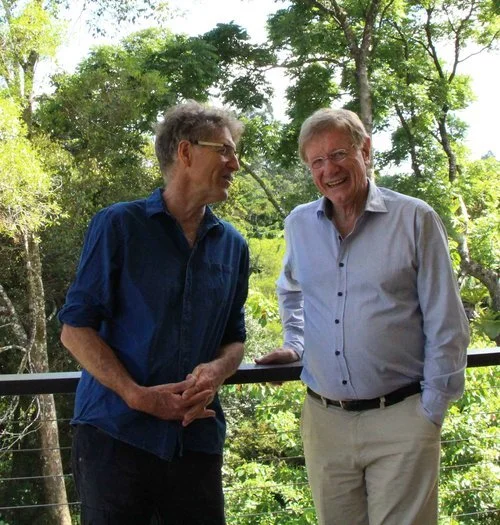
Her other books include Gamble for Power, Ducks on a Pond and the recently released Unfettered and Alive, a memoir, which she discusses here with Steven Lang.

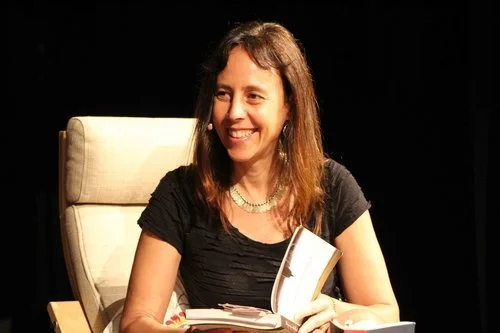
Melissa Fagan in conversation

Melissa Fagan in conversation

For all who know Brisbane, McWhirters, a once celebrated department store in Fortitude Valley, is an icon. For Melissa Fagan it is also the starting point for a remarkable exploration of her mother and grandmother’s lives, a poignant reminder of the ways in which retail stores and fashion have connected women’s lives across the decades.

Behind the dusty shop counters of an Art Deco treasure, Melissa discovered both what had been lost and what continued to shine. Her book is, ultimately, a tender exploration of self and family, speaking of the ways in which life surprises us and of how the legacies of others can truly enrich our own relationships and lives.

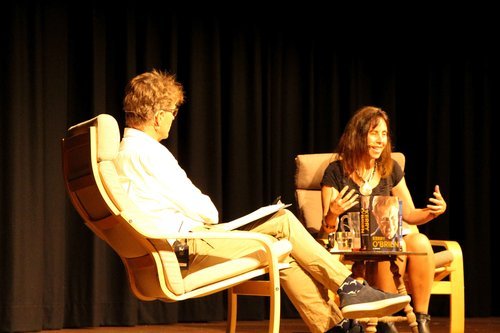
Kerry O'Brien in conversation

Kerry O'Brien in conversation

In his intimate ground-breaking memoir, told with wit and insight, Kerry O’Brien reflects on the big events he has observed, on lessons learned and ignored, on the foibles and strengths of the public figures who construct our world. The end result is an engrossing study of a life lived in the public eye, a life intrinsically bound up in nearly three-quarters of a century of social and political history.

Kerry is one of Australia’s most respected journalists. He has won six Walkley awards including the Gold Walkley and the Walkley for outstanding leadership in journalism. In a career spanning more than fifty years, he has worked for a wire service, newspapers, television and as a foreign correspondent. Thirty-three of those years were at the ABC where he worked on current affairs programs such asThis Day TonightandFour Corners. He was the inaugural presenter of Lateline and the editor and presenter of 7.30 for fifteen years.

Shelley Davidow in conversation

Shelley Davidow in conversation

Shelley discusses her recently published memoir Shadow Sisters.

During the terrifying years of Apartheid in South Africa, Shelley Davidow’s family was a crime. At a time when it was illegal for black and white people to live together, Shelley’s social activist parents took in Rosie, an abandoned black three-year-old. Rosie grew up as a beloved daughter and sister in a white household. Against the backdrop of racist laws and ever-present threats of violence, Shelley’s parents did all they could to provide a safe, happy home for their five children. But when Rosie was sixteen, devastating truths came to light, shattering the family’s understanding of the past.


'Davidow's memoir is not only a vivid, stark and resonant reminder of those days, but a rites-of-passage tale about growing up in the midst of violence and killing – as well as experiencing the pangs of first love.' Sydney Morning Herald

Gillian Triggs in conversation

Gillian Triggs in conversation

Gillian Triggs has had a long and diverse career in International Law. Born in London she migrated along with her parents to Australia in 1958, when she was thirteen. She attended school in Melbourne and studied law at Melbourne University, then went to Texas to do a Masters in Law, working with the Dallas Police Force on the implementation of the Civil Rights Act. She completed a doctorate a decade or so later. In 1982 she was admitted to the Supreme Court of Victoria as a barrister and solicitor. Soon after that she joined Mallesons Stephen Jaques as a consultant on International law practicing with them for ten years before joining the Melbourne Law School as a professor of International Law. While there she produced papers on a range of subjects, including the WTO, energy and resources law, the law of the sea, international criminal law, international environmental law and human rights.

In 2007 she took on the role of Dean of the University of Sydney’s Law School. In 2012, as we all know, she was appointed the President of Australia’s Human Rights Commission, a position she held for five years. She is now the Acting Aboriginal and Torres Strait Islander Social Justice Commissioner and is here with us today to talk about her recently published memoir Speaking Up.

Patrick Nunn in conversation

Patrick Nunn in conversation

Patrick Nunn is here to talk about his recently published book The Edge of Memory, Ancient Stories, Oral Tradition and the Post-Glacial World.

Patrick is the author of several other books, including the popular Vanished Islands and Hidden Continents of the Pacific. He is, at present, Professor of Geography at the University of the Sunshine Coast but is well known for the work he undertook in the Pacific Islands where he was, for 25 years, part of the faculty of the University of the South Pacific, holding the positions of Professor of Oceanic Geoscience and pro-Vice Chancellor. His early work on the Quaternary geology and tectonics of many islands and island groups in Fiji, Samoa, Tonga and Vanuatu still represents the latest word on many of these issues today.

Patrick has been a member of the Intergovernmental Panel on Climate Change (IPCC) on several occasions, and, in that role, he was a co-recipient of its 2007 Nobel Peace Prize. He has also been awarded the Gold Medal of the Royal Geographical Society of Queensland, and his world-class research in climate change has been extended with the announcement that he will be Lead Author on the ‘Small Islands’ chapter of the next Assessment Report of the IPCC, scheduled for completion in 2022.

Kristina Olsson in conversation

Kristina Olsson in conversation

Kristina Olsson is a Brisbane-based writer. She worked as a journalist for many years, writing for The Australian, The Courier-Mail and The Sunday Telegraph. She has written both novels and memoirs, including The China Garden and Boy, Lost, the memoir about her mother and about Kristina’s missing brother, which won the 2014 NSW Premier's Prize for nonfiction and was shortlisted for the Stella Prize. Just this month Simon & Schuster have chosen Kristina’s new novel, Shell, to launch the literary imprint of Scribner in Australia.

Kristina has been to Maleny several times, some of you may remember her visiting Rosetta Books in the 2000s to talk about her novel In One Skin and the book she co-wrote with Debbie Kilroy, Kilroy was here.

Josepha Dietrich in conversation

Josepha Dietrich in conversation

We begin with Josepha Dietrich whose memoir In Danger was published by UQP earlier this year. By way of introduction I’m going to take the unusual step of reading the author note from the front of her book as a way of describing her because, honestly, I can’t think of a better description:

Josie Dietrich is an English immigrant to Australia. She lives in Brisbane in the home she and her partner built on passive house principles. After coming out of a long reign as a carer, she’s worked as a research assisant for universities on projects to improve psychiatric discharge planning and women’s wellness after cancer. Her prior long-term work was in the After Hours Child Protection Unit, assessing children’s risk of harm alongside the Sexual Offences and Child Abuse Unit of Victoria Police. To remain sane during this period, she flitted off overseas for months at a time to climb cliff faces while sleeping on beaches or in abandoned shepherd’s huts. After her cancer treatments finished and in light of her experience caring for her dying mother, Josie joined the advisory committee of CanSpeak Queensland as a cancer and consumer advocate.

This memoir, In Danger, is about her own journey through a diagnosis of breast cancer, following on from the death of her mother from the same disease fourteen years previously. It is not by any means a grim book, in fact it’s quite the opposite, probably, or possibly because of Josie’s familiarity with the illness and her lack of sentimentality towards it.

Gareth Evans in conversation

Gareth Evans in conversation

Gareth Evans was a representative for the Australian Labor Party in both the Senate and the House of Representatives for twenty-one years, from 1978 to 1999. During that time he served as a member of Cabinet for fourteen years in the Hawke and Keating governments, including seven and a half as Foreign Minister, a role in which, it is univerally acknowledged, he excelled.

After leaving politics he became President and CEO of the International Crisis Group from 2000 to 2009, during which period the organisation grew to become the pre-eminent international non-government organisation (NGO) working on the prevention and resolution of deadly conflict.

He is presently the Co-Chair of the international advisory organisation The Responsibility to Protect (R2P), from 2010 to 2015 he was Chair of the International Advisory Board of the Canberra-based Centre for Nuclear Non-Proliferation and Disarmament, and remains the Patron and Emeritus Convenor of the Asia Pacific Leadership Network on Nuclear Non-Proliferation and Disarmament. He is also the Chancellor of the Australian National University.

He has written or edited eleven books including A Cabinet Diary, Inside the Hawke-Keating Government, and the new book he discusses in this podcast Incorrigible Optimist.

Shelley Davidow in conversation

Shelley Davidow in conversation

Shelley Davidow is the author of Whisperings in the Blood, a memoir in which immigrant voyages, repeated from one generation to the next, form the basis of an extraordinary story that explores the heartache and emotional legacies created by those who leave their homelands forever. It tells the story of her grandfather, Jacob Frank, who leaves his village in Lithuania to sail to America, of her mother, leaving America to go to South Africa, and her own voyage repeating these and other journeys before settling in Australia. Shelley now lives on the Sunshine Coast.

A C Grayling in conversation

A C Grayling in conversation

A C Grayling is a genuine example of that much bandied about thing, a most remarkable man. Born in Rhodesia, raised in Nyasaland, he discovered a love for philosophy at the age of twelve, going on to study at ever more prestigious institutions, culminating in Magdelene College, Oxford.

Apart from being the author of thirty books he writes widely on contemporary issues, including war crimes, euthenasia, secularism, the legalisation of drugs and human rights. He founded the New College of The Humanities, an independent undergraduate college in London, where he is presently the Master, and was, just this year, awarded the Commander of the British Empire (CBE) for his services to philosophy.

His most recent book, The Age of Genius, the Seventeenth Century and the Invention of the Modern Mind, argues that the mind-set of modern times was established in the 1600s, amid terrible war and great injustice. His contention is that, despite such turmoil, this was the period in which ideas of magic and revelation, and the dead hand of religious law, first gave way to science and the rational, leading the way to the Enlightenment and the modern world as we know it. It is a work of philosophy but also of history, following the lives of some of the most significant figures from the period.

Malachy Tallack in conversation

Malachy Tallack in conversation

Malachy Tallack is from the Shetland Isles, as far north in Scotland as you can go. He attracted a lot of attention with his first book, 60 Degrees North, an account of his journey around the world along the line of the 60th latitude. It was a book that Robert MacFarlane described as brave and beautiful, chosen by BBC Radio 4 as Book of the Week. He was in Australia to promote his new work, The Un-Discovered Islands, a study on islands of imagination, deception and human error. Also well-known as a singer songwriter with four albums to his name, in the final ten minutes of this podcast Malachy plays a couple of his songs.

Kári Gíslason in conversation

Kári Gíslason in conversation

Kári Gíslason was born in Iceland. He’s the author of four books, two non-fiction and two novels. The Promise of Iceland tells the story of return journeys he’s made to his birthplace, while Saga Land: The island of stories at the edge of the world, co-written with Richard Fidler, is an account of visits they made together to the places where the Icelandic sagas actually took place. It won the Indie Book Award for Non-Fiction in 2018.

Here he discusses his new novel, The Ashburner. Kári comes back onto the stage to answer questions at the end of Richard Fidler's podcast.

Richard Fidler in conversation

Richard Fidler in conversation

Richard Fidler is best known these days for his Conversations with Richard Fidler on ABC radio. Conversations is the most podcast program on the ABC, with 1.8m podcasts downloaded a month, which, by any standards, is a lot of podcasts.

But Richard had an earlier career, before he morphed into Australia’s best interviewer. He started out in the trio the Doug Anthony All Stars in the 80s, playing guitar in the ensemble with Paul McDermott and Tim Ferguson. All three of them have gone on to be significant figures in Australian cultural life, but at the time DAAS was an iconoclastic group who tore into, and apart, every taboo they stumbled across during the eighties and early nineties, and, I think it is fair to say, they bumped into a fair few. DAAS was, at the start, better known overseas than it was in Australia, at least until they joined up with the comedy show The Big Gig. The British comedian Al Murray said of seeing the group at the Edinburgh Festival in 1988, "they came onstage with the attitude of feral invaders … they were an insanely hot act who sang, cursed, sweated and insulted each other and their audiences with a level of commitment and polish that seemed exotically charged and almost transgressive…” Hard to imagine when you see the demure Mr Fidler sitting next to me on the stage here.

But he has morphed once again, now, into a historian. In 2014 he went to Istanbul with his son Joe and, on his return sat down to write an account of their travels while seeking out the location of many of the crucial moments in Byzantine history. Richard says of himself that the label is not appropriate, he is more of a history enthusiast than a historian, but you’d be hard pressed I think, once you’ve read Ghost Empire, to argue the point, for this is a history begging to be told, a history that picks you up and engages you on so many levels, demanding a rethink of how we view our past, and, really, there’s little else you can ask from a history book.